

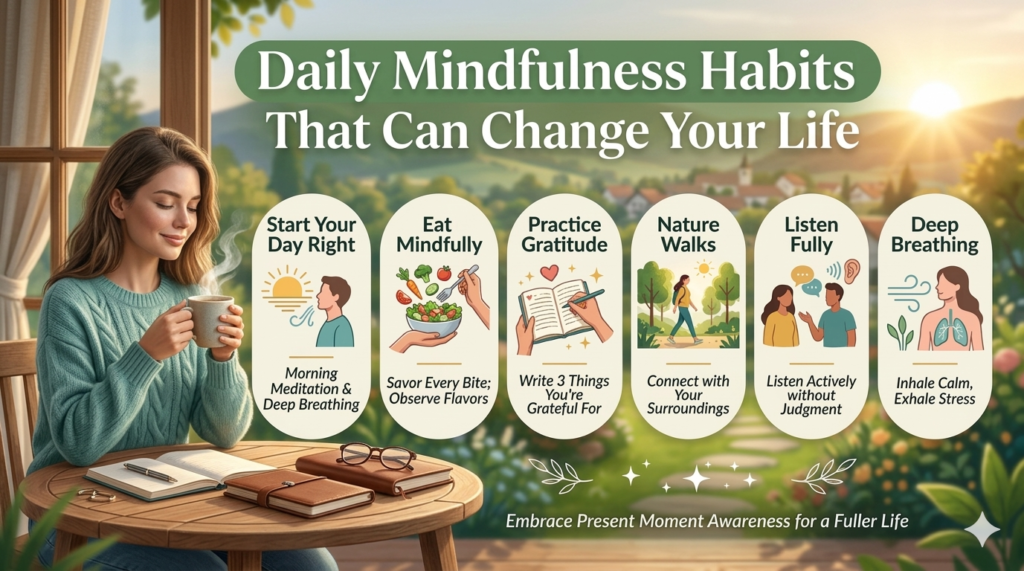
In today’s fast-paced world, stress, distractions, and constant multitasking can leave you feeling overwhelmed and mentally exhausted. Incorporating daily mindfulness habits into your routine can transform your life by improving focus, reducing stress, and enhancing overall well-being.
Mindfulness is the practice of being present in the moment, fully aware of your thoughts, feelings, and surroundings without judgment. Starting small and consistently practicing mindfulness can lead to profound changes in both mental and physical health. This guide will provide practical steps to integrate daily mindfulness habits into your life effectively.
Why Daily Mindfulness Habits Are Important
Practicing mindfulness every day offers numerous benefits:
- Reduces stress and anxiety
- Improves focus and concentration
- Enhances emotional resilience
- Promotes better sleep
- Supports healthier relationships
By following daily mindfulness habits, you can create a calmer, more intentional lifestyle that improves your overall quality of life.
1. Start Your Day with Intention
How you begin your day sets the tone for everything else:
- Take a few minutes after waking up to breathe deeply
- Set an intention for the day, such as “I will stay present and calm”
- Avoid immediately checking your phone or emails
Starting your morning with purpose is one of the most effective daily mindfulness habits.
2. Practice Deep Breathing
Deep breathing helps anchor you in the present moment:
- Inhale slowly for 4 counts
- Hold your breath for 4 counts
- Exhale gently for 6 counts
Doing this for 5–10 minutes daily can reduce tension, lower stress hormones, and strengthen your focus. Deep breathing is a core component of mindfulness exercises.
3. Mindful Eating
Eating mindfully transforms mealtime into a relaxing practice:
- Eat slowly, savoring each bite
- Avoid distractions like phones or TV
- Pay attention to textures, flavors, and smells
Mindful eating supports better digestion and helps you develop healthier eating habits while reinforcing daily mindfulness habits.
4. Short Meditation Sessions
Even brief meditation sessions make a difference:
- Spend 5–10 minutes each day meditating
- Focus on your breath or a calming word
- Gently return your focus if your mind wanders
Meditation is a powerful mindfulness practice that enhances clarity and emotional balance.
5. Incorporate Mindful Walking
Walking can be both exercise and mindfulness practice:
- Focus on the sensation of your feet touching the ground
- Notice your surroundings, sounds, and smells
- Walk slowly, breathing deeply with each step
Mindful walking is an excellent way to develop daily mindfulness habits while staying active.
6. Limit Multitasking
Trying to do too many things at once can reduce efficiency and increase stress:
- Focus on one task at a time
- Give full attention to whatever you are doing
- Pause before switching to another task
Single-tasking improves productivity and reinforces mindfulness at work.
7. Practice Gratitude Daily
Gratitude enhances mindfulness by bringing awareness to positive moments:
- Write down three things you’re grateful for each day
- Reflect on small joys and achievements
- Express appreciation to others
Daily gratitude exercises are key mindfulness habits that improve mental and emotional well-being.
8. Engage in Mindful Listening
Active, attentive listening strengthens relationships and mindfulness:
- Focus fully on the speaker without interrupting
- Notice body language and tone of voice
- Respond thoughtfully rather than reacting impulsively
Mindful listening is a practical daily mindfulness habit that promotes deeper connections.
9. Use Mindful Pauses
Short breaks throughout the day help you stay grounded:
- Pause for a few deep breaths before meetings or tasks
- Step outside to observe your surroundings
- Stretch mindfully and focus on sensations
Mindful pauses improve focus and are essential mindfulness practices.
10. Limit Screen Time
Excessive screen exposure can increase stress and mental fatigue:
- Set boundaries for phone and computer use
- Take regular breaks from screens
- Avoid social media before bedtime
Reducing screen time supports calmness and reinforces your daily mindfulness habits.
11. Practice Journaling
Writing down thoughts and emotions increases self-awareness:
- Reflect on your experiences each day
- Note moments where you practiced mindfulness
- Identify areas for growth and improvement
Journaling is a simple yet powerful mindfulness habit that improves clarity and emotional health.
12. Mindful Movement or Yoga
Incorporating gentle movement improves both physical and mental well-being:
- Practice yoga, stretching, or tai chi
- Focus on body sensations and breathing
- Move with intention rather than rushing
Mindful movement is an essential element of daily mindfulness habits.
13. Evening Reflection
End your day with calm and awareness:
- Review the day’s events and your responses
- Celebrate small victories and mindful moments
- Prepare intentions for the next day
Evening reflection strengthens the consistency of mindfulness routines.
14. Connect with Nature
Spending time outdoors enhances presence and relaxation:
- Observe trees, flowers, or the sky
- Listen to natural sounds without distraction
- Take mindful walks in parks or gardens
Nature connection is a powerful mindfulness habit that reduces stress and improves mood.
15. Be Patient and Kind to Yourself
Mindfulness is a practice, not perfection:
- Allow yourself to make mistakes
- Gently return to mindfulness when distracted
- Practice self-compassion daily
Patience and self-kindness are crucial to maintaining consistent daily mindfulness habits.
Conclusion
Incorporating daily mindfulness habits into your routine can profoundly improve mental clarity, emotional stability, and overall well-being. By starting small with meditation, deep breathing, mindful eating, journaling, and mindful movement, you can gradually transform your life into a calmer, more focused, and intentional experience.
Remember, mindfulness is a lifelong practice. Consistency, patience, and self-compassion are the keys to successfully integrating these habits. Start today, take small steps, and watch your life change for the better.